Independent Store Startup: If Your Budget Is Tight, Do Not Rush Into Ads. Do This First
If you are in the early stage of building an independent store and your budget is limited, do not rush into paid ads. Do this first.
Imitate first, then test. Understand first, then publish content.
When you are building a cross-border independent store, promotion is usually the biggest headache. If you run ads, your budget is limited and you are afraid of burning money without results. If you do not run ads, relying only on natural traffic from platforms takes too long.
This is especially true when you are starting alone or with a small team. Your energy is already limited, so every dollar has to be spent where it actually matters.
Today I want to share a method we have actually used in practice. It is very simple, very direct, and it saves money. The core idea comes down to two words: imitate first.
In the Startup Stage, Do Not Rush Into Ads. First, Understand Competitor Accounts and Their Independent Stores.
Step 1: Do Not Rush to Post Content. Find a “Teacher” First.
First, decide what product you want to sell. Then go to TikTok or YouTube and search for accounts related to that product category.
Pay attention here: do not start by staring at creators with millions of followers. Those people can get traffic from almost anything they post. That is not something we can easily copy, so their reference value is limited.
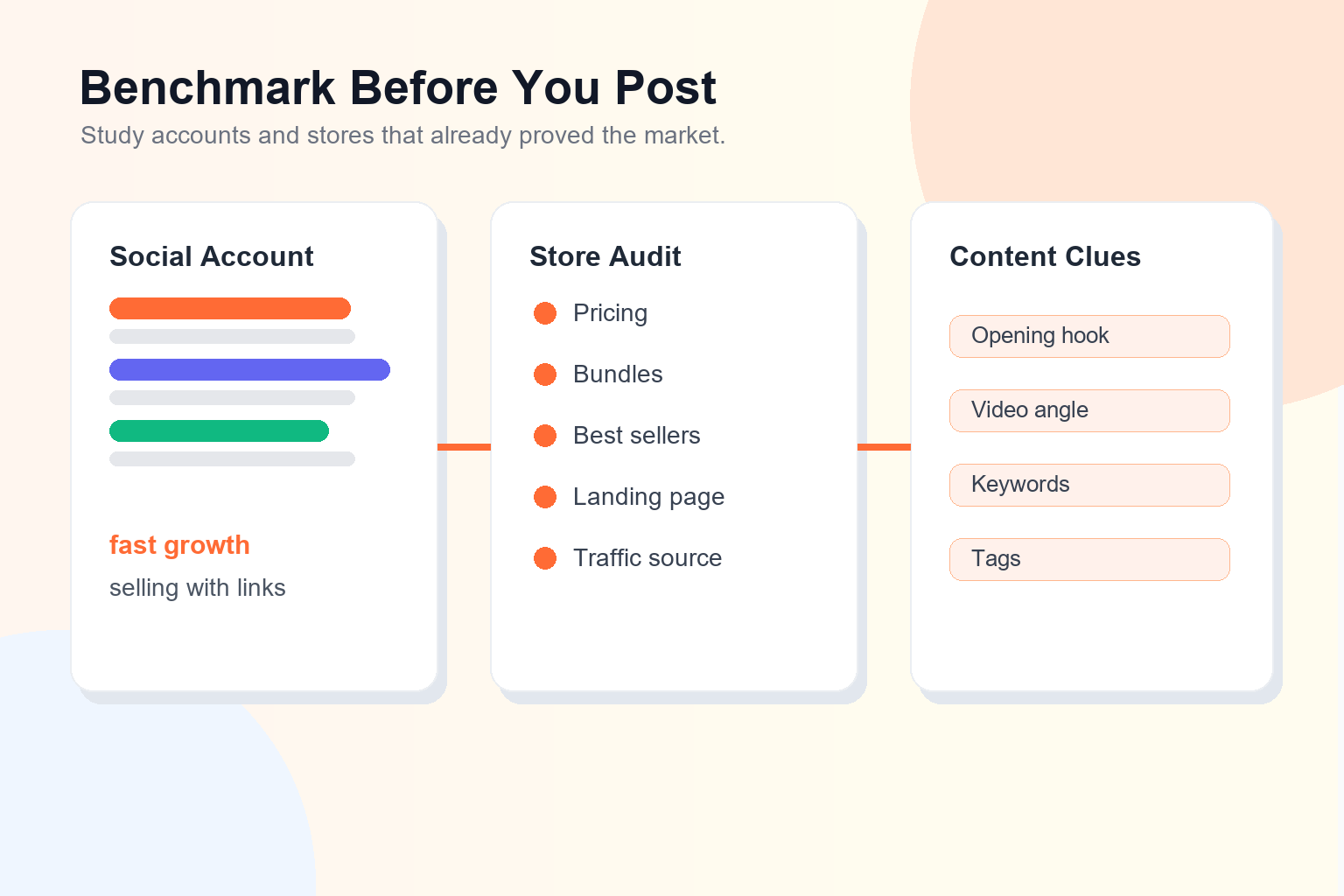
What you should look for is this kind of account: the follower count is not extremely high, but the data has been growing quickly in the past few months, and the account is already linking out and selling products.
Accounts like this have usually already helped you validate the market. Their playbook is also more grounded and easier to imitate.
Find one benchmark account that you can actually learn from, then decide how you should create content.
Step 2: Study the Benchmark Account Thoroughly.
After you find several accounts like this, do not just watch casually. Spend some time finding and studying their independent stores as well.
Focus on these areas:
- Product pricing: How much are they selling for? Are they using discounts or bundle offers?
- Best-selling products: Which products in the store sell well? What do they have in common?
- Website style: How is the homepage laid out? How are the product descriptions written?
- Traffic sources: Besides short videos, where else are they promoting? Are they running ads?
- Videos and keywords: How are their titles, captions, and tags written? How do the first few seconds grab attention?
Organize all of this. Once you put it together, you will find that many ideas can be directly referenced.
Step 3: Prepare Content in Batches and Publish Ten to Twenty Videos First.
After researching benchmark accounts, you will probably have a rough idea of what kinds of products are easier to make popular in this category and how the videos should be filmed.
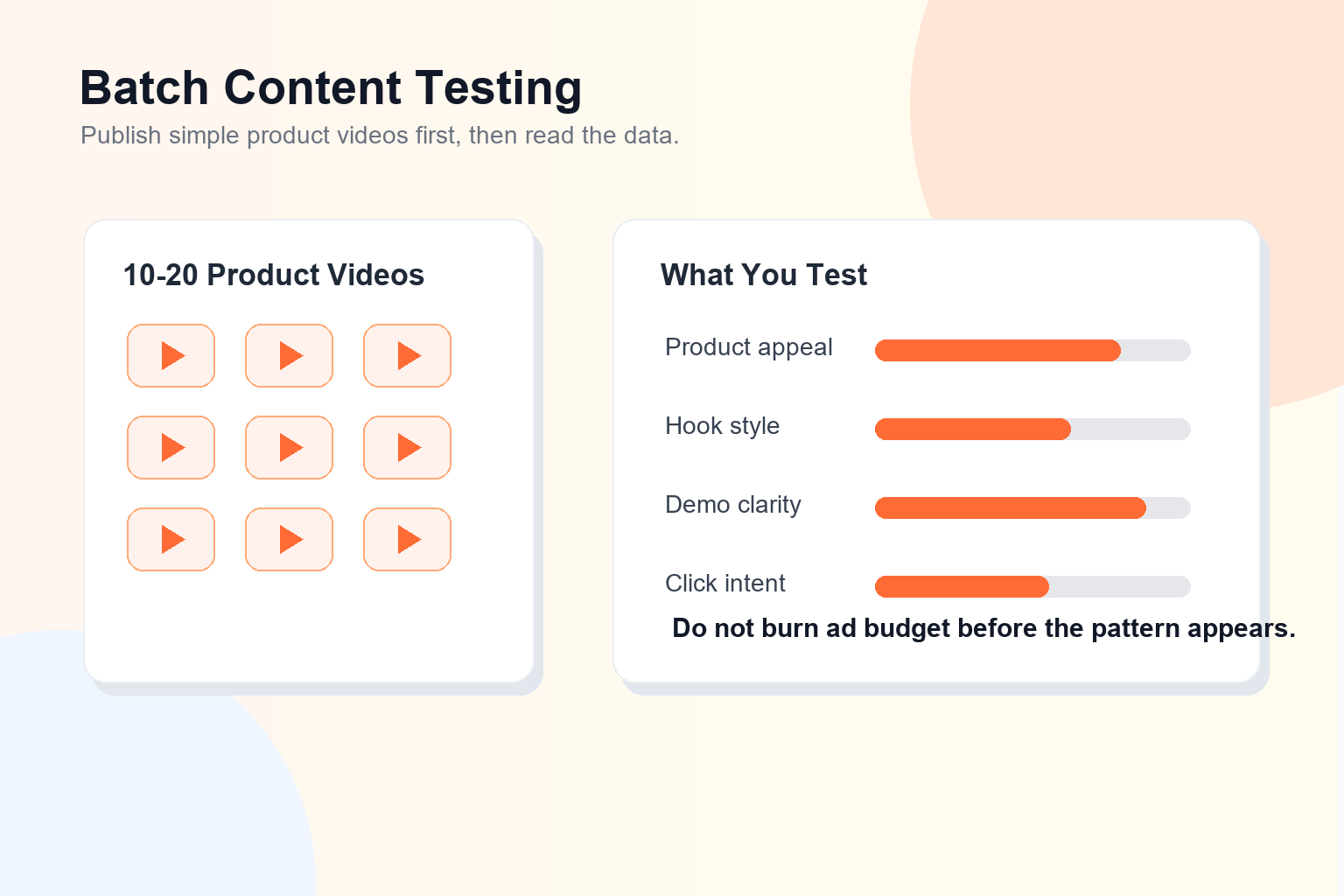
The next step is to take action. Prepare a batch of product videos, around ten to twenty videos. They do not need to be overly polished. The key is to show the product clearly.
Then publish them in batches on TikTok or YouTube while keeping a steady posting frequency. Remember to place your independent store link in your profile, so interested users can click through directly.
The core of this step is testing. You need to see which type of video performs better and which product attracts more attention.
Start with a small batch of content testing. Do not throw ad budget in from the very beginning.
Step 4: Once You Have a Basic Follower Base, Then Consider Paid Promotion.
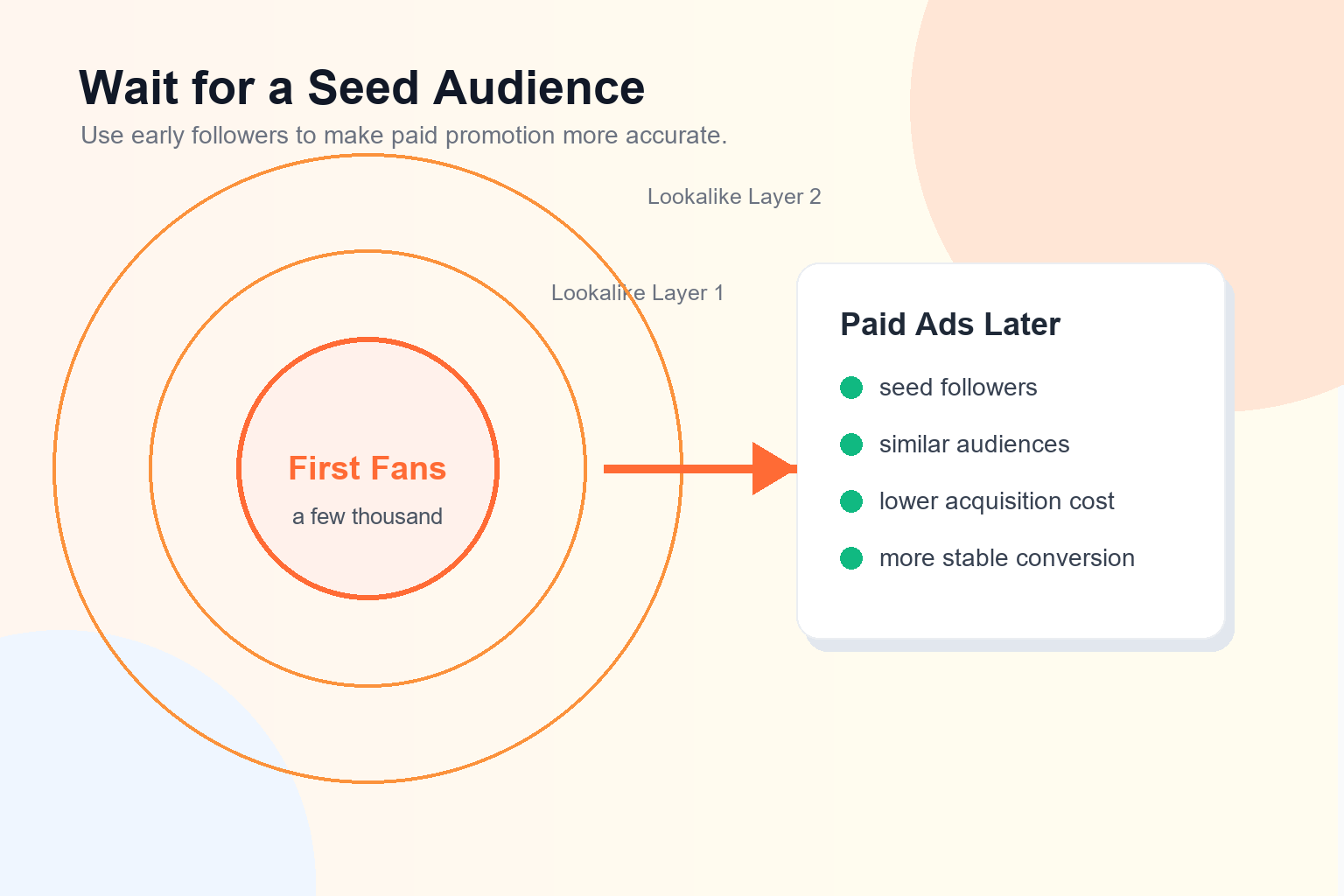
After your social account slowly accumulates a few thousand followers, the situation becomes completely different.
At that point, when you run paid promotion, you can use these followers as a seed audience and expand into similar audiences. Because the system already knows what kind of people are interested in your content, it can find potential customers more accurately.
Compared with blindly running ads as soon as an independent store goes online, this approach usually brings much lower customer acquisition costs and more stable conversion rates.
Final Thought
When your budget is limited, the scariest thing is not being slow. The scariest thing is going in the wrong direction and still stepping hard on the accelerator.
Learn to imitate first. Study benchmark accounts and independent stores thoroughly. Then create content, test, and only after that move into paid promotion.
This path may not look as exciting, but for the startup stage, it is often much steadier.